Cloud Computing Company in India Helping Tech Businesses Scale in 2026

Cloud Computing Company in India Helping Tech Businesses Scale in 2026

Introduction
India is rapidly emerging as a global technology powerhouse. As we move into 2026, digital transformation for Indian tech companies is no longer a choice — it is a necessity. Organizations are embracing advanced technologies like artificial intelligence, cloud computing, automation, and data-driven systems to stay competitive in both Indian and global markets.
This blog explores the latest digital transformation trends in India for 2026 and how technology companies can prepare for the future.
1. Artificial Intelligence Becoming Core to Business Strategy
In 2026, AI is no longer limited to experimentation. Indian tech companies are embedding artificial intelligence into core business operations.
Key AI-driven transformations include:
- AI-powered decision-making systems
- Intelligent chatbots and virtual assistants
- Predictive analytics for business forecasting
- Automation of customer support and operations
AI adoption is helping Indian companies improve efficiency, reduce costs, and deliver personalized digital experiences.
2. Cloud Computing as the Foundation of Digital Transformation
Cloud technology continues to be the backbone of digital transformation in India. Companies are shifting from traditional IT infrastructure to cloud-first and hybrid cloud models.
Benefits driving cloud adoption:
- Scalability for fast-growing businesses
- Secure remote access and collaboration
- Faster application deployment
- Cost optimization and infrastructure flexibility
Cloud computing enables Indian tech companies to innovate faster and compete globally.
3. Automation and Intelligent Workflows
Automation is transforming how Indian companies operate. In 2026, intelligent automation powered by AI is streamlining repetitive tasks and improving operational accuracy.
Popular automation use cases include:
- Robotic Process Automation (RPA)
- AI-driven workflow management
- Automated DevOps and CI/CD pipelines
- Intelligent data processing systems
Automation allows tech companies to focus on innovation instead of manual processes.
4. Data-Driven Digital Transformation
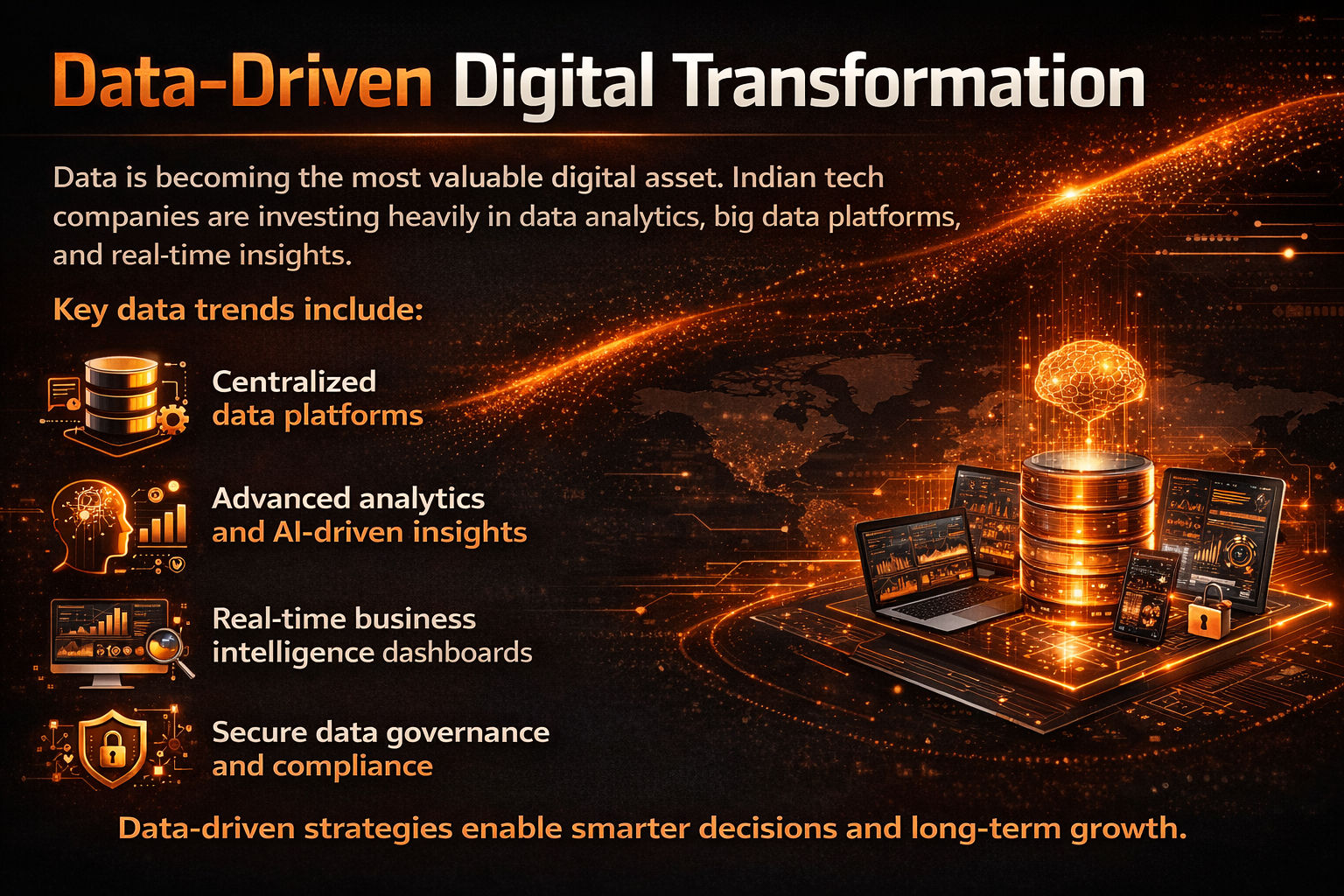
Data is becoming the most valuable digital asset. Indian tech companies are investing heavily in data analytics, big data platforms, and real-time insights.
Key data trends include:
- Centralized data platforms
- Advanced analytics and AI-driven insights
- Real-time business intelligence dashboards
- Secure data governance and compliance
Data-driven strategies enable smarter decisions and long-term growth.
5. Cybersecurity as a Core Digital Priority
With increased digitization comes higher security risks. In 2026, cybersecurity is a critical part of digital transformation strategies for Indian tech companies.
Security trends include:
- Zero-trust security architecture
- AI-powered threat detection
- Cloud security and data protection
- Compliance with global data regulations
Strong cybersecurity builds trust and protects digital assets.
6. Rise of Industry-Specific Digital Solutions
Indian tech companies are moving toward industry-focused digital transformation rather than generic solutions.
Key industries adopting digital transformation:
- FinTech and Banking
- Healthcare and HealthTech
- E-commerce and Retail
- Manufacturing and Supply Chain
- SaaS and Enterprise Software
Customized digital solutions deliver higher efficiency and better ROI.
7. Global Expansion Through Digital Transformation
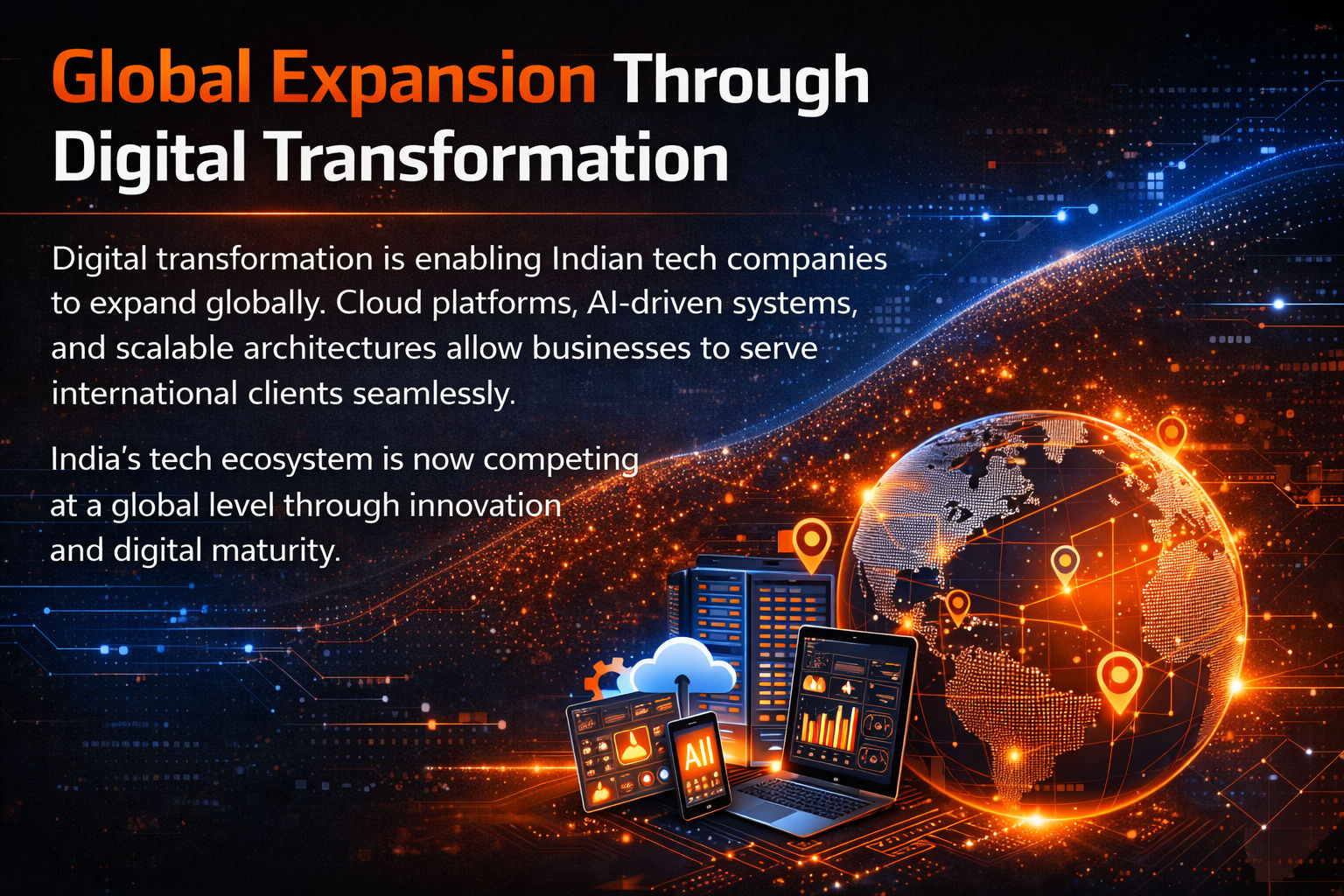
Digital transformation is enabling Indian tech companies to expand globally. Cloud platforms, AI-driven systems, and scalable architectures allow businesses to serve international clients seamlessly.
India’s tech ecosystem is now competing at a global level through innovation and digital maturity.
Conclusion
The digital transformation trends for Indian tech companies in 2026 highlight a clear shift toward intelligent, cloud-driven, and data-centric business models. Companies that adopt AI, cloud computing, automation, and cybersecurity will lead India’s next phase of digital growth.
Partnering with the right technology company can accelerate this transformation and ensure long-term success.
Visit https://starxtechnology.ai/ to explore how digital transformation can power your business growth.
Frequently Asked Questions (FAQ)
1. What is digital transformation for Indian tech companies?
Digital transformation for Indian tech companies refers to the adoption of advanced technologies such as artificial intelligence, cloud computing, automation, and data analytics to improve business operations, customer experience, and global competitiveness.
2. Why is digital transformation important in India in 2026?
In 2026, digital transformation is crucial for Indian companies to stay competitive, scale globally, enhance cybersecurity, reduce operational costs, and meet evolving customer expectations in a digital-first economy.
3. What are the key digital transformation trends in India for 2026?
The major digital transformation trends in India for 2026 include artificial intelligence adoption, cloud-first strategies, intelligent automation, data-driven decision-making, cybersecurity modernization, and industry-specific digital solutions.
4. How does AI support digital transformation for Indian businesses?
AI supports digital transformation by automating processes, enabling predictive analytics, improving customer support through chatbots, and delivering personalized digital experiences across platforms.
5. How does cloud computing help Indian tech companies grow globally?
Cloud computing allows Indian tech companies to scale infrastructure on demand, deploy applications faster, ensure global accessibility, improve collaboration, and maintain high security while expanding into international markets.
6. Which industries in India benefit the most from digital transformation?
Industries such as FinTech, healthcare, e-commerce, manufacturing, SaaS, and enterprise IT benefit significantly from digital transformation through improved efficiency, automation, and data-driven innovation.
7. How can companies start their digital transformation journey in India?
Indian companies can start their digital transformation journey by assessing current systems, defining clear digital goals, adopting cloud and AI technologies, prioritizing cybersecurity, and partnering with an experienced technology company.